


News
-
PPE Recycling for Life Science Labs: Cut Costs and Close the Loop
Lab PPE recycling cuts disposal costs AND closes the loop on single-use plastic waste. Here's how life science labs are right-streaming waste to save money and meet ESG goals.
-
Sustainable Lab Solutions for Life Science Teams: What Works in 2026
The best sustainable lab programs cut costs through right-streaming, not just reduce waste. Here's what's working for life science labs in 2026.
-
Lab Plastic Recycling: A Practical Guide for Scientists and Biopharma Teams
Most lab plastics end up in the wrong — and expensive — waste stream. Learn how right-streaming and closed-loop recycling can cut costs and close the loop.
-
How To Transform Your Waste Liability Into An Asset (MMM, Ep. 8)
Is your facility over-classifying regulated waste? You're not alone — and it's costing you more than you think. In this video, we break down one of the most overlooked inefficiencies in industrial and laboratory waste management: the tendency to over-regulate waste out of caution, and how that default behavior quietly drives up disposal costs, increases liability exposure, and leaves valuable data sitting on the table.
We'll walk through how to audit your current waste streams, identify where overclassification is happening, and — more importantly — how to flip the script entirely. Instead of treating waste as a liability to be managed, forward-thinking operations are turning waste data into a strategic asset: driving smarter procurement decisions, improving sustainability reporting, and unlocking new circularity opportunities. What you'll learn:
- What regulated waste overclassification is and why it's so common
- The hidden financial and operational costs of getting classification wrong
- How to build a data-driven approach to waste characterization
- Real examples of turning waste liabilities into measurable business value
- Where to start if you're managing waste across multiple sites or waste streams
- Whether you're in lab operations, EHS, procurement, or sustainability, this one's for you
-
The Powered By Polycarbin Story (MMM, ep 7)
Episode 7 of Monday Morning Mailbag dives into the story behind Powered by Polycarbin. James O’Brien and Noah Pyles unpack how the program came to life, why closed-loop materials matter, and what it really takes to turn recycled lab plastics into high-performance products. It’s a candid look at partnership, product innovation, and how circularity actually gets done in the life sciences.
-
How To Sell Polycarbin To Your Colleagues (MMM, ep 6)
Welcome back to the Monday Morning Mailbag! In today’s episode, we’re diving into one of the most common questions we get from scientists, sustainability teams, and operations leaders: “How do I get my colleagues on board with Polycarbin?” Whether you’re trying to improve your lab’s sustainability footprint, streamline operations, or build a culture of responsibility, this episode breaks down the most effective ways to communicate the value of Polycarbin across your organization.
-
What Makes Recycling Sustainable and What is TRUE Circularity (MMM, Ep. 5)
- Resource Conservation – Using the same material more than once reduces the need for new resources.
- Waste Reduction – Materials stay in use instead of going to landfill.
- Fossil Fuel Displacement – Especially critical in plastics, since virgin resin comes from fossil fuels.
-
California’s SB54 Explained: What It Means for Life Science Plastics & Lab Consumables (MMM, Ep. 4)
California’s landmark SB54 plastics law is reshaping how companies think about waste, recycling, and compliance—and the life science consumables industry is no exception. From pipette tips and conical tubes to packaging and lab plastics, SB54 introduces new rules on extended producer responsibility (EPR), recycled content mandates, and landfill diversion that could transform lab supply chains. In this video, we break down: What SB54 requires and when it takes effect How the law impacts life science consumables manufacturers, distributors, and labs The financial stakes, including potential multi-million-dollar penalties How companies can adapt through circular economy models, closed-loop recycling, and sustainable resin use Whether you’re a researcher, sustainability officer, or part of a lab supply chain, this video gives you the insights you need to prepare for the future of lab plastics under SB54.
-
Nitrile Glove Recycling Explained: NBR, Downcycling & Sustainable Lab Plastics (MMM, Ep.3)
In Episode 3 of Polycarbin’s Monday Morning Mailbag, hosts James O’Brien and Noah Pyles explore the science and sustainability behind nitrile glove recycling. Learn how nitrile butadiene rubber (NBR) is processed, why nitrile gloves are uniquely suited for recycling, and what actually happens during the recycling process. We also unpack the concept of downcycling, when it makes sense, when it doesn’t, and how it compares to the circular economy for laboratory plastics. If your lab is looking to reduce waste, improve ESG reporting, or better understand sustainable lab plastics and glove recycling programs, this episode offers practical insights you can use today.
-
A Partnership to Lead Lab Sustainability Innovation
![]()
 Beckman Coulter Life Sciences and Polycarbin Partner to Lead Lab Sustainability Innovation Read the article and official press release here Indian...
 -
LBNL Researchers Show Up to Close the Loop
![]()
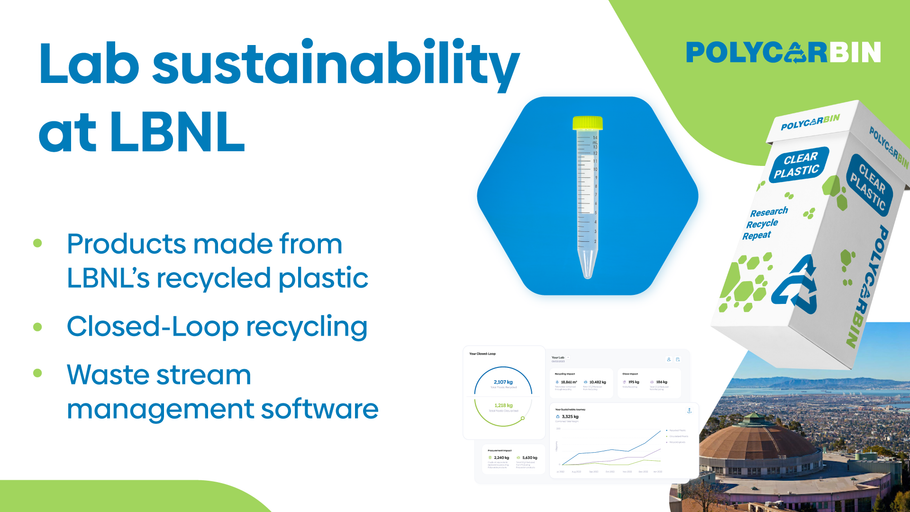 The revolution in science isn't just about breakthrough discoveries; it's also about the commitment to resource efficiency. Among the myriad resear...


- Page 1 of 2
- Next page


