
Services
Products



Polycarbin’s Life Cycle Assessment (LCA) is conducted in accordance with ISO 14040 and ISO 14044 and uses the U.S. EPA’s TRACI 2.1 impact model to quantify the full environmental footprint of our closed-loop recycling process. It has been independently reviewed by a third-party panel — so every outcome you report reflects real, verifiable environmental benefit.
A Life Cycle Assessment measures the environmental burden of a product or process across every stage of its life. ISO 14040 sets out the principles and framework; ISO 14044 sets out the requirements.
Under ISO 14044, a critical review is mandatory before an LCA can support a publicly disclosed comparative environmental claim — and review by a panel of independent experts is the most rigorous form that review takes. Polycarbin’s LCA meets both criteria.
Assumptions, data sources, and system boundaries are documented, so the method can be examined rather than accepted at face value.
Impacts are characterized with TRACI 2.1, the U.S. EPA’s Tool for the Reduction and Assessment of Chemical and other environmental Impacts.
A standardized framework lets results be compared against linear waste and virgin resin pathways, and carried into other ISO-aligned reporting.
Using TRACI 2.1, we evaluate key impact categories, including but not limited to the six below, specific to both your location and Polycarbin’s operational geography.

Greenhouse gas emissions that drive climate change.
Emissions that thin the stratospheric ozone layer.
Nutrient pollution that fuels algal blooms and oxygen loss in waterways.
Emissions that form acid rain and acidify soil and water.

Chemical emissions with potential effects on human health.

Chemical emissions with potential effects on freshwater ecosystems.
The same pound of material can carry a different footprint depending on where it starts and where it is processed — regional energy grids, transport distances, and local ecosystems all change the result. Our model is regionalized to your site and to the places Polycarbin operates, so your numbers reflect your program rather than a national average.
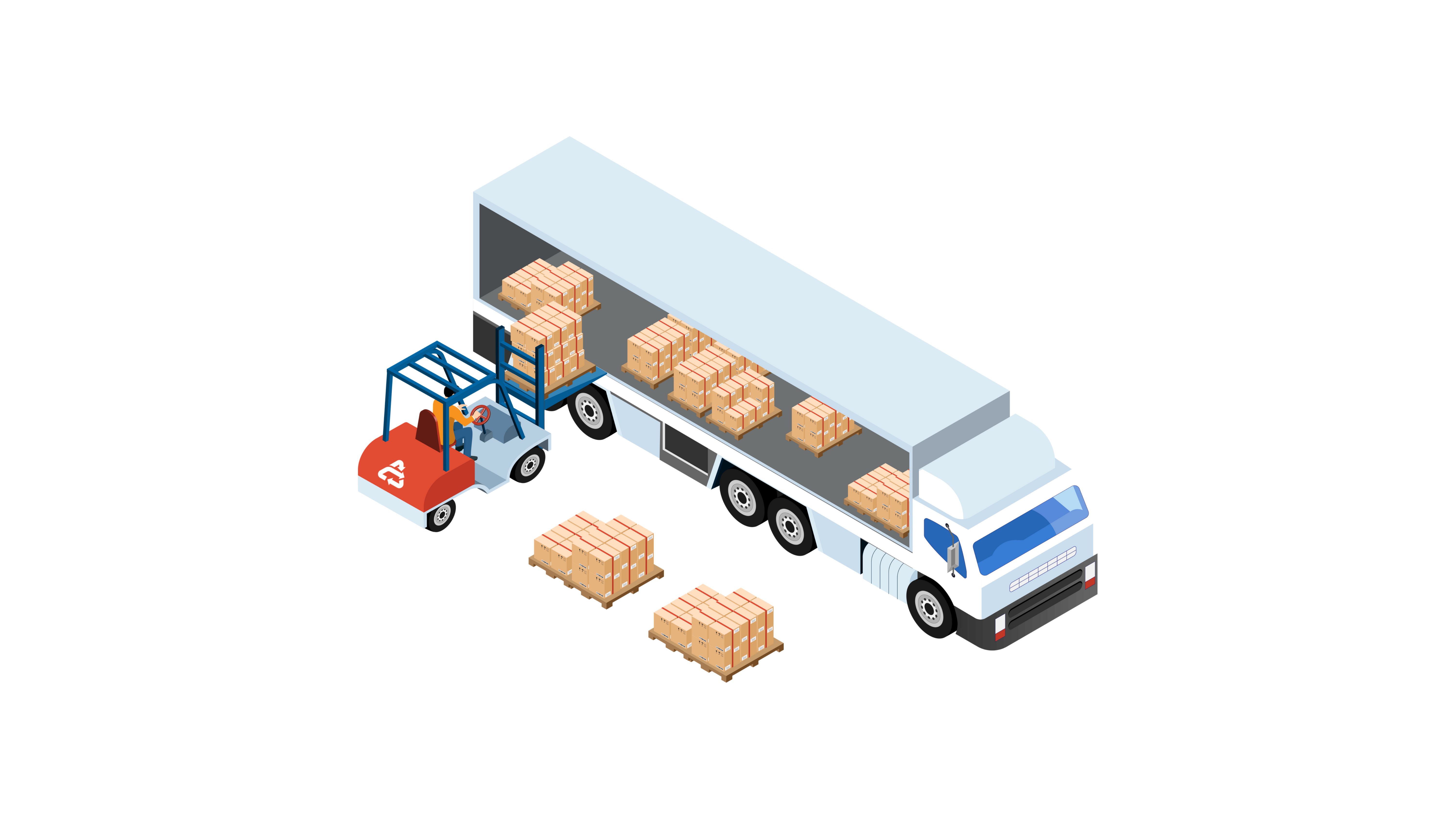
The assessment follows your material through each stage of our circular supply chain — from collection and transport through processing, compounding, and logistics — up to the point our Closed-Loop Resin is delivered to one of our partnered lab product manufacturers.
Single-use materials leave your lab in Carbins, by mailback or scheduled pickup.
Material moves from your site to Polycarbin’s aggregation and processing network.
Recovered material is sorted by stream and prepared for recycling.
Prepared material is compounded into Closed-Loop Resin (CLR).
CLR ships to a partnered lab product manufacturer.
Resin arrives at the manufacturer — the boundary of the assessment.
New fossil-based resin for every product, and a disposal burden at the end of each one.
Material leaves the lab as waste and returns to the same market as product.
By comparing the closed-loop system against traditional, linear waste and virgin resin pathways, the LCA quantifies the environmental burden your program avoids.
Our LCA isn’t a report that sits on a shelf. Because it models each stage of our supply chain, it shows us where our own footprint comes from — and gives us a consistent baseline for decisions about how material is collected, moved, processed, and compounded.
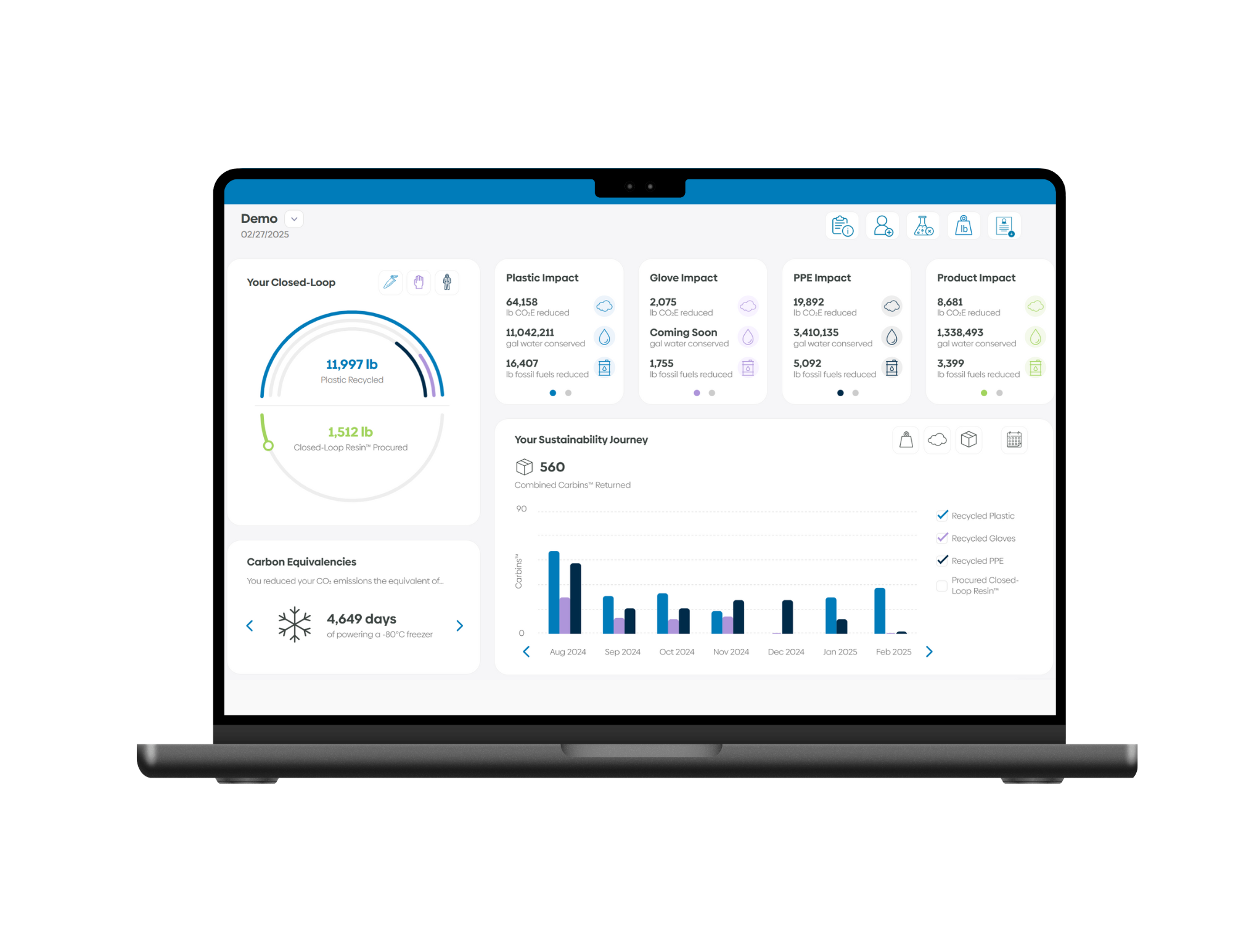
The Carbin Counter is Polycarbin’s cloud-based reporting platform, free to every customer. The LCA is the engine underneath it.
Every pickup and mailback is weighed and logged by stream — plastics, gloves, PPE, and more.
The regionalized, third-party-reviewed LCA model is applied to your actual volumes.
Carbon, water, fossil fuel, and more — updated in your Carbin Counter as material moves.
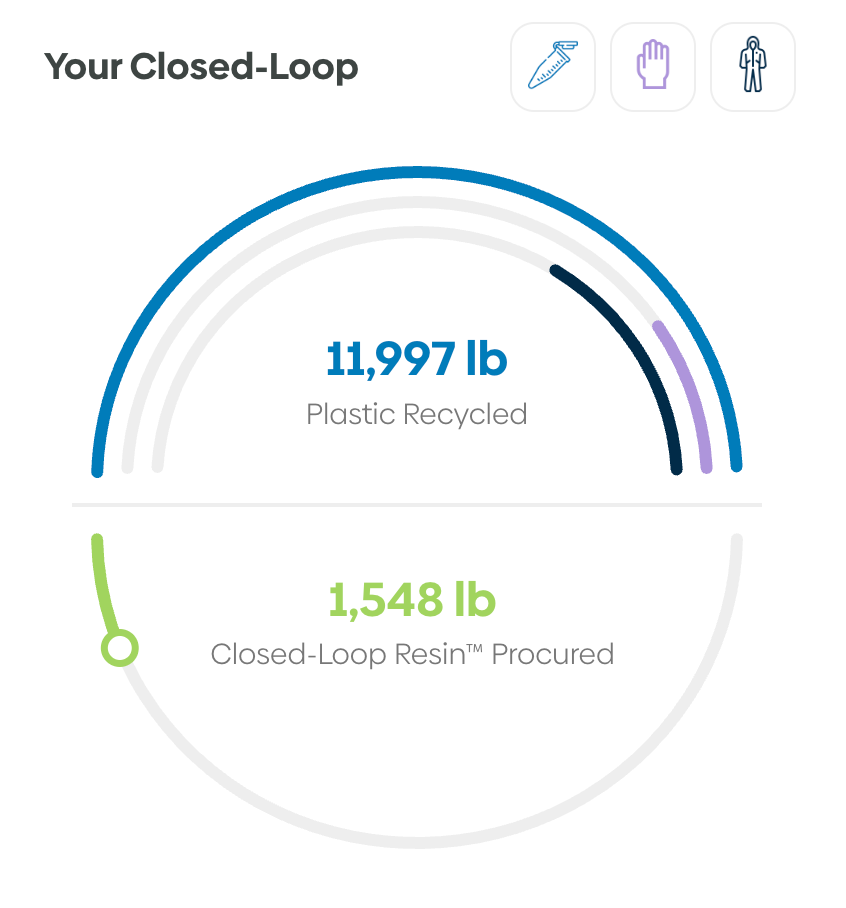
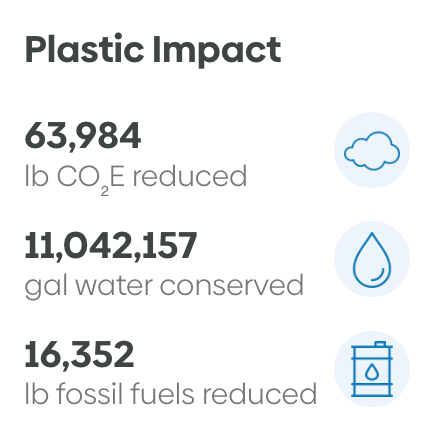
The LCA model is independently reviewed by a third-party panel. Your individual figures are calculated by applying that reviewed model to the material you actually send us — not estimated from industry averages.
Learn more about the Carbin Counter →Because Polycarbin uses ISO standardization and the TRACI 2.1 model, the metrics in your Carbin Counter are transferable to most ESG and CSR reporting platforms — supporting Scope 3 disclosures, investor reporting, and sustainability communications without the manual reconciliation compliance reporting normally demands.
 Carbin Counter exports


Talk with our team about bringing closed-loop recycling and ISO-compliant reporting to your lab — or log in to see your numbers now.